
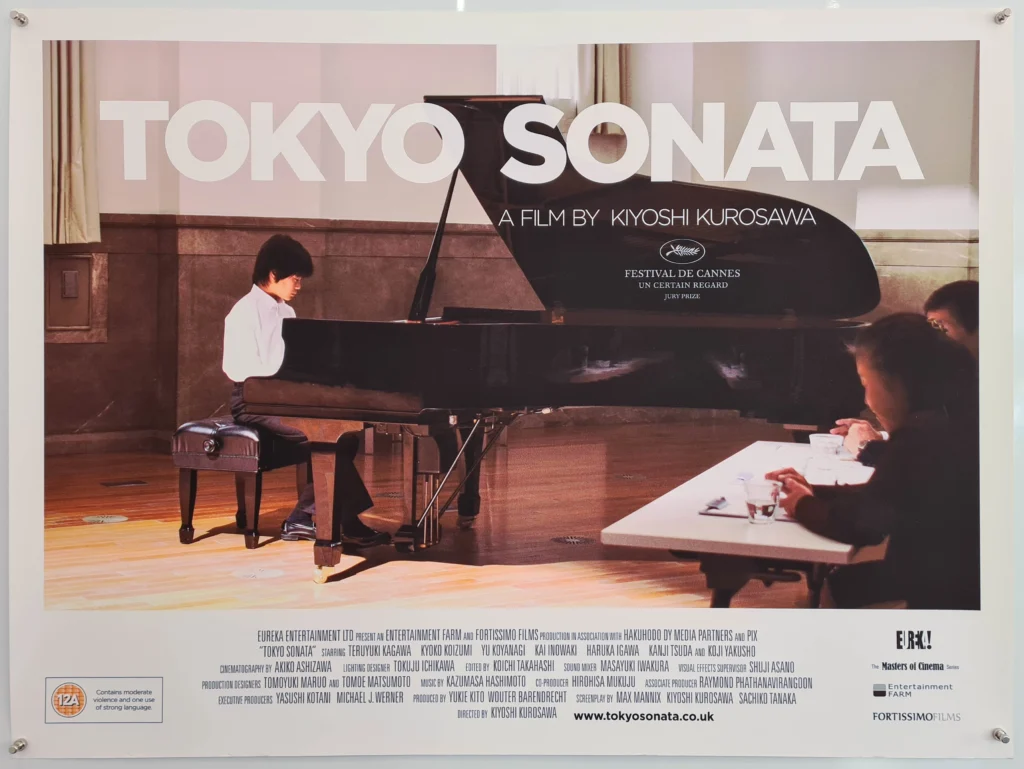
“Tokyo Sonata” left me feeling drained, like my inner organs were exposed to the relentless vacuum of deep space. One of the festival organizers, seeing me leave, asked how the film was, and I responded with a heavy heart. She sympathized, having recommended several of her friends to go see it on its opening night, only to watch them leave the cinema, teary and bleak.
Perhaps the film hits its mark because nearly everyone in the audience can sympathize with the story of a Japanese family, where every member of the family leads a hidden, secretive life though they meet every day for dinner, that meal is silently guarded, and no one really knows anyone else.
I wouldn’t say that my childhood experience mimicks this exactly, but I can understand the feeling of alienation and misunderstanding. The role of parent child, while fitting when the kids are young, soon starts to seem irrelevant, especially when you suggest that many adults are still struggling with their own insecurities and fears.
Director Kiyoshi Kurosawa, known for his horror films, gives it to us in “Tokyo Sonata”, a seemingly sleepy examination of a family, tragically locked in the trappings of modern life. The father is an administrative manager who loses his job, but is too ashamed to tell his family, so he gets up everyday and dresses in his fine suit, looking for work and standing in the free food line in the park. The mother exists only as a housewife and has willingly obliterated her own recognitions of herself as a person outside of the family.
The film is genuinely funny to begin with, almost like the tenuous plot of a prime time sitcom middle management husband hides unemployment from family! All it needs is a laugh track and a catchphrase, and we’re golden. Fortunately, Kurosawa is adept at avoiding the obvious comedy stylings and leads us down a dark, forbidding road. The film meanders into horror not of the supernatural type but reminds us that we’re all so tragically close to falling into our own Sonata.
I left the screening feeling wretched, as if someone had pulled the cord on my morphine drip, but strangely entranced. “Tokyo Sonata”, filmed in gloriously grainy film, with the grim neighborhoods of urban Japan indistinguishable from any other, reminds us that we’re all part of the current. As the husband goes to work, there’s a constant flow of others like him. When he loses his job, there’s an unending line of businessmen like him, waiting for new jobs. How can your story be tragic if it’s mirrored by hundreds like you?
And this is the terror not in the tragedy of the story, which is bleak and hopeless, a family going through the motions of being connected, but, rather, that there are so many families like this, perhaps yours, perhaps mine. Kurosawa’s playful comedy turns into a nightmarish horror film, one that hits the heart like no other. From Midnight Eye
“Tokyo Sonata” was entered into the Sydney Film Festival competition and, though it didn’t win, I’ve heard numerous accounts of the impact of the film. This is incisive, penetrative material and Kurosawa’s grainy footage, reminiscent of a 70s drama, makes the film appear like something out of our collective memory. Is it the fear of failure that makes “Tokyo Sonata” resonate with audiences, or is it, bizarrely, the fear of the fear of failure?
I say
One of the finest films shown at the festival, a scathing remark on how we’ve let ourselves drift into anonymity and alienation.
See it for
You’d easily mistake this for a comedy, at the start, as the film seems almost slapstick in its execution.
For more movies like Tokyo Sonata (2008) visit Hurawatch.
Also watch: