
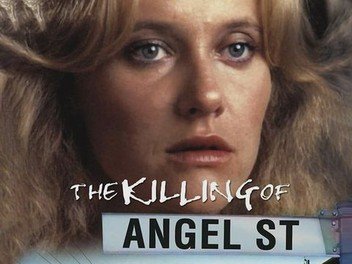
You’ll lose your lunch about a half hour into The Killing of Angel Street. The film is stamped in its opening credits as a work of fiction, with any resemblance to real characters being purely coincidental, so when someone mentions the disappearance of an anti-development campaigner named Juanita Nielsen, the film suddenly feels laughably disingenuous.
The real Nielsen was a Kings Cross-based publisher and campaigner against real estate development in the suburb. Nielsen disappeared in 1975 and it’s widely believed she was kidnapped and killed because of her anti-development stance. A coronial inquest determined that Nielsen had been murdered, although the case has never been officially solved.
Unfortunately, The Killing of Angel Street fails to leverage Nielsen’s story into a decent film. What should be a sinister and gritty tale overplays its hand badly, the film becoming something of poorly put together genre piece.
At the centre of the narrative is Jessica (Liz Alexander). Having returned to Sydney only to be confronted by the chaotic development of her once peaceful neighbourhood and then the suspicious death of her agitating father, Jessica decides to dig into the affairs of the group behind a proposed high-rise tower. The development group aren’t accustomed to playing nice (or subtly, it seems), and soon Jessica, along with union leader Elliot (John Hargreaves), is neck deep in a life-threatening conspiracy.
The Nielsen case is fantastic grist for a feature film, but Angel Street fumbles things so badly it’s little wonder it didn’t give social activism a bad name. There are plot holes through which you could pilot a ship and Donald Crombie’s direction is disappointingly flat: most Australian filmmakers of the time would play Jessica’s late film internal examination for all its exploitative worth, but Crombie goes so far in the opposite direction that a cavity grab seems positively innocuous.
It doesn’t help that the characters are one-dimensional cutouts. Alexander is a winsome presence and Hargreaves reliable as ever, but they have the feeling of two players pushing uphill, particularly when it comes to the damp squib romance that’s forced upon them. The minor characters mostly feel like they’re straight off the stage, although a notable inclusion in the supporting cast is Brendon Lunney, better known as either Edmund Fitzalan or Governor Frontbottom, depending on your generation.
The technical credits are adequate but hardly spectacular, and stretched to breaking point by the melodramatic aspects of the films thriller trappings. Perhaps worst of all is Brian May’s (no, not THAT Brian May) overly obvious and distractingly purple score – it often feels like a parody of itself.
The Killing of Angel Street isn’t the only film inspired by the disappearance of Juanita Nielsen: Phillip Noyce would throw his hat into the ring a year later with Heatwave. I haven’t seen that particular effort but with the Noyce involved you’d imagine it’s better than this. Angel Street isn’t all bad, but it takes a frightening true story and somehow manages to make it all seem totally ridiculous.
I say:
Inspired by a true story but distracted by its love of all things blue collar, The Killing of Angel Street could have been much better than it ultimately is.
See it for:
Liz Alexander is a relatively unknown Australian actress, but carries plenty of presence as Jessica.
For more movies like The Killing of Angel Street 1981 visit Hurawatch.
Also watch: