
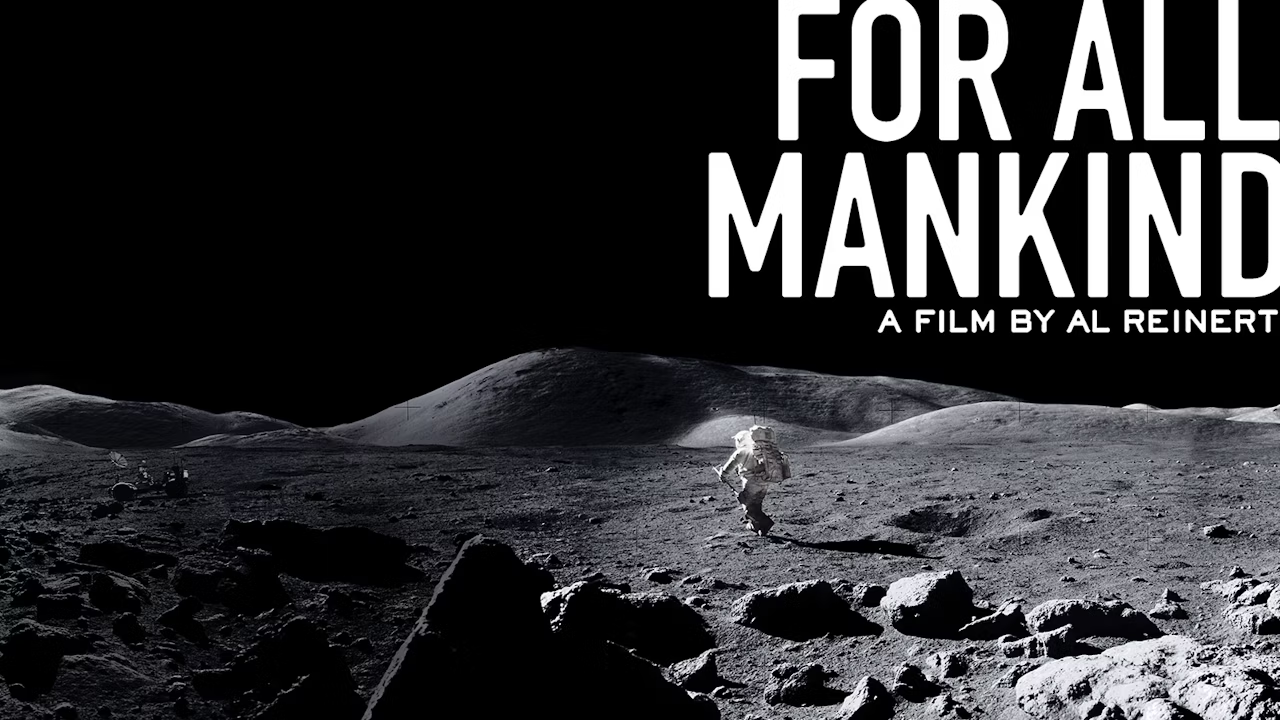
When gifted with a chance to view thousands of hours of previously unreleased NASA footage from nine manned flights to the moon between December 1968 and November 1972, director Al Reinert’s approach was to orchestrate a composite viewpoint for his intended documentary. For All Mankind (1989) then, at 80 minutes, is a commendably disciplined abbreviation of some remarkable astronaut perspectives. Using the recollections of the 24 men who took part in the missions as narration, Reinert allows a collective experience to take shape by leaving both the voices and Apollo flights unspecified.
The film is constructed chronologically and with footage spliced together to form a logical, continuous stream. From a documentation of the mundaneness of everyday habits sequestered at zero gravity, the awe and wonder quotient is gradually raised. A sense of the enormity of space, and a simultaneous reduction of man’s miniscule place nestled alongside the stars in the mysterious firmament, is evoked by the astronaut’s observations. For beyond the anything but simple fact of these men being enfolded by the aesthetic majesty of the outer universe is the distraction of ‘down time’ in which their fragile state of suspension can be unhealthily contemplated for lengthy stretches.
Freefalling through these boundless black realms is like being placed at the end of a cord, a precarious state of being in which the earth dangles in the distance like a suspended marble. There’s a genuine impression of eeriness that accompanies the passage of these men but one moment in particular strikes a particularly creepy note an astronaut relates a dream of he and a fellow traveller following a mysterious sets of tracks along the moon’s surface, only to encounter a pair of withered doppelgangers that had been there for thousands of years.
Plenty of footage from the home base solidifies the anticipation and drama that plays out behind the scenes. From the frank assessments of these immortalised participants it becomes overwhelmingly clear that many infinitesimal pieces needed to adhere to ensure the success of the missions. For evoking the infinity of space and the magnitude of these missions, Reinert’s desire to fashion a ‘found footage’ film feels justified. It provides a wholeness that helps you overlook the piecemeal construction and focus on the audacity of mankind’s ambitions and strength of the many unforgettable images, often merged as they are with the haunting music of Brian Eno.
I say:
A first-rate, cannily stitched together documentary that is as awe-inspiring and insightful as it was in 1989.
See it for:
The views of Earth from space, a miraculous, infinite backwards glance that will long linger in the imagination.
For more movies like For All Mankind 1989 visit Hurawatch.
Also watch: