
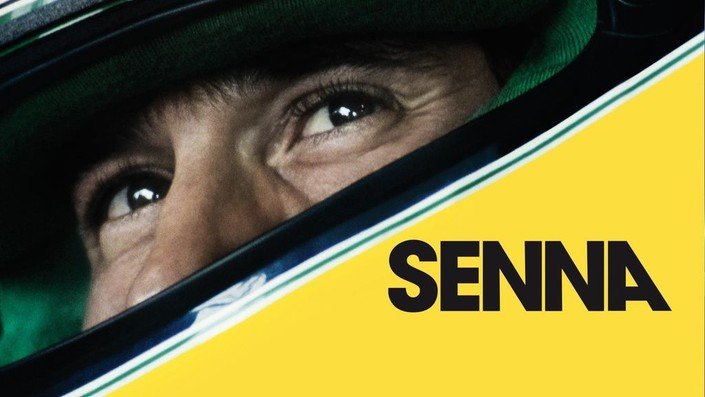
As feature length documentaries proliferate in the cinemas, filmmakers have been encouraged to find more innovative ways of telling their stories. Senna is the latest in a slew of recent examples that takes cues from its subject matter to drive home the immediacy of its tale.
Director Asif Kapadia’s rabbit in the hat is his unfettered access to the Formula One Management or FOM broadcasts, which every second Sunday of the northern summer, year after year, beam images of four-wheeled gladiators across the globe. It allows the filmmakers to immerse the audience in Formula 1 completely, so you never feel more than an arm’s-length away from Ayrton Senna, this film’s charismatic, passionate and ultimately tragic subject.
In 2011, 17 years after his death, Senna is often regarded as the greatest racing driver who ever lived. It was an opinion shared by many during his career too, but others weren’t so quick to praise the Brazilian, mostly because of a divisive personality that put him at odds with many in the sport. If you watched Formula 1 you were either for Senna or against him almost never in between. In Britain the unofficial home of Formula 1 he was particularly controversial, and often suffered backhanded criticism at the hands of the country’s media.
In that sense, it’s easy to feel as if Senna is out to redress an imbalance. From the film’s first shots you are plunged into the Formula 1 paddock via the FOM broadcasts and almost immediately presented with Senna’s arch-nemesis, Alain Prost. Where Senna was passionate, Prost was ‘The Professor’, the slightly older Frenchman treating the sport as a chessboard and its participants and massive coterie like a never-ending rotation of kings, queens and pawns.
The film perhaps over-eggs once or twice Prost at one point coming across as a Machiavellian calculator, manipulating other people to fight his own battles but is generally respectful of the duel waged between the two drivers, realising that there is little need to overstate what was a titanic and frequently dangerous struggle.
While the rivalry with Prost forms the spine of the film’s story, racing fans may be disappointed to discover that little time is devoted to some of the Brazilian’s other famous competitors.
The three-time champion Nelson Piquet the older, laid-back Carioca whom Senna’s personality almost immediately eclipsed barely registers, whilst Nigel Mansell is all but missing completely, which is a little more curious given the emotion, aggression and speed that made him a flat-cap wearing British take on the Brazilian.
But these characters are eschewed to make time for addressing Senna’s personal life. In these segments the filmmakers once again dig up some remarkable footage, drawing on family video to slowly piece together the private side of their subject. The results are eye opening, particularly if your prior knowledge of Senna has been filtered through the English-speaking media. The Brazilian is revealed in all his dichotomies playboyish but introverted, driven but conflicted. As with the FOM material, it’s easy for the audience to sink right into the story.
It means the film gathers an undeniable propulsion as it winds its way towards its tragic ending. The decision to not include any talking heads certainly helps in this regard. Rather, the interviewees appear by voice only, even if they themselves are sometimes included in the stock footage.
The collection of people who speak about Senna may to some feel a little short there are no contemporary comments from any of those who raced against the Brazilian, or indeed those champions who came before him and at the time often deigned to judge his talent. Somebody like the Austrian driver, Gerhard Berger Senna’s one-time team mate and closest friend in the paddock is almost conspicuous by his absence.
But those who don’t follow the sport won’t notice these minor quibbles. And that’s the most important thing to remember about this film: it’s not aimed at racing fans or rev-heads, it’s aimed at the general public, so human and effortlessly exciting is Senna’s story. That’s not to say there aren’t plenty of heart in mouth moments the cut and thrust of the races and horror of shattering carbon fibre is unnerving when seen on a cinema screen but Senna does what it sets out to do, shining a light on a sports figure whose misunderstood nature was for many years sealed by his own tragic death.
I say:
A propulsive, gripping documentary that will leave the hairs raised on the back of your neck and enlighten many as to what made Ayrton Senna tick.
See it for:
Some frightening race scenes and candid home video. Antonio Pinto’s heart-pounding score is an excellent accompaniment to the visuals.
For more movies like Senna 2010 visit Hurawatch.
Also watch: