
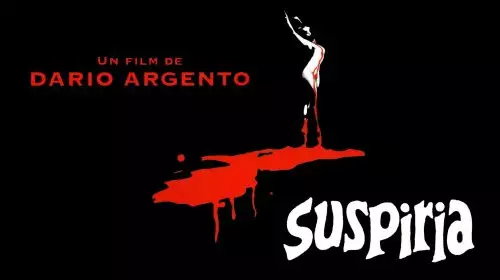
Dario Argento’s “Suspiria” is one of his most renowned and best loved films, with his mastery of audio and visual language on full effect for this barely coherent horror movie centered on a coven of witches.
Years after its 1977 release, the film has lost much of its weight; the gore and special effects are dated, the acting is stiff and wooden, and uspiria.JPG” target=”_blank”>even the poster is rather tepid. Additionally, all the highly-criticized Argento faults are here, most noticeably, the plot that requires the audience to suspend belief.
Despite all these flaws, though, “Suspiria” is a magnificent film, a shining example of how Argento uses sound and pacing to fill the screen with unease and tension. The movie moves slowly, even quizzically, at times, but Argento maintains perfect control on the atmosphere, drawing the audience into horror, then stepping back, until the final, shrieking end.
In the film, an American dance student, named Suzy, comes to Germany to study at a famous dance academy, and from the first night she arrives, strange things seem to happen. The school is filled with bizarre girls, and the English dubbing makes their delivery even more peculiar.
Not much dancing happens in the film, as Suzy quickly falls ill and is ordered to stay in bed, with a special diet and daily dosages of medicine. The instructors at the academy are quite strict and cold, with a German dance teacher that yells at Suzy to lift her legs higher, higher!
The innocence of the female students contrasts sharply with the academy, which is both provocative and sexual in its construction, with wide open spaces, which Argento uses to to great effect, filming his protagonists from hidden corners, then hitting them with full close up, effectively disorientating the viewer and causing us to be part of his perverse vision.
Quickly after, the movie’s story seems to dive into nonsensical twists, but, by this point, we’ve stopped caring about the narrative structure; instead we’re mesmerized by Argento’s wonderful mise-en-scene, his overexcited use of lurid green and red lighting to mark the scenes as supernatural.
It’s almost as if you were watching a theatrical presentation at the Grand Guignol, a French theatre in the 1890s that specializes in dramatic gore. Argento uses his stage well, highlighting Suzy’s wide, terrified eyes and throwing her around at his mercy.
Indeed, Argento would face criticism for his films, which were labeled misogynistic… his obsession with the female form and the subsequent mutilation of this form would appear to be from hatred, especially when you read that Argento used his own hands to represent the murders in the film.
Personally, I find his treatment of his female characters to be a beautifully choreographed dance, with terror and murder as the vertex, pivoting the film on his sensually colorful backdrop.
“Suspiria” seems laughable at times, especially at the end, which feels confusing, especially after an hour and a half of excruciating tension. Nevertheless, Argento is in fine form here, creating a greatly loved, hugely influential horror movie that supersedes narrative, eschewing it for pure, unadulterated love of cinematic horror.
Recommended to me by Bryn from Horrorphile – read his review…
I say:
A must-see for horror fans, and an excellent movie for those of us that appreciate passion in cinema.
See it for:
The final scene is harrowing, though it probably could have had more of an impact. The soundtrack by Goblin definitely adds to the atmosphere, with the background of heavy, heartbeat-like rhythms following terrible shrieks and screams.
For more movies like Suspiria (1977) visit Hurawatch.
Also watch: