
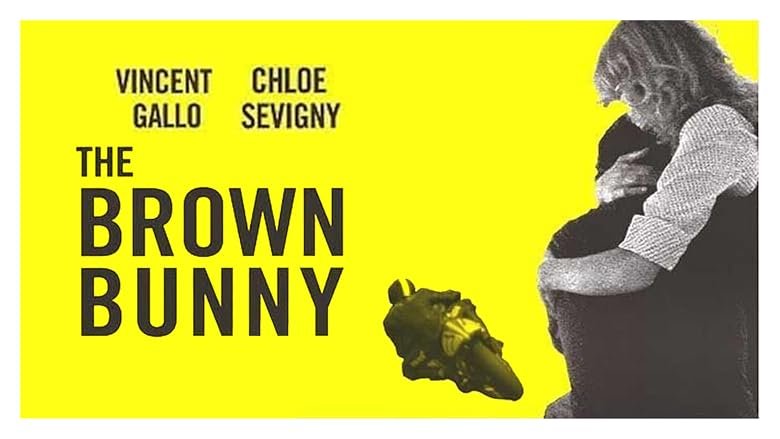
The Brown Bunny is the story of Bud Clay (Gallo), a professional motorcycle racer facing a long, depressing trip across country after a third place finish on a New Hampshire racetrack. As Bud points his car west towards his home speedway in Los Angeles, the camera watches him reminisce about his girlfriend Daisy (Chloë Sevigny) and suffer through an array of emotional outbursts. As he moves closer to his destination it becomes increasingly obvious that all is not well in California.
Bud spends most of his travels pursuing standard road trip fare stopping for the bathroom, having a bite to eat, catching a night’s sleep at a hotel, filling up his gas tank. Gallo captures these quotidian events in a mind numbing, matter of fact detail that moviegoers will find at odds with the typical summer movie offering.
But along the way Bud has incongruous eruptions of empathy and anguish. Bud’s conflicted emotional state leaves him with a sixth sense for suffering. He pathetically pleads for a young gas station employee (Anna Vareschi) to join him on his trip, only to abandon her as she packs her belongings. He catches the eye of a forlorn, middle-aged woman (Cheryl Tiegs) sitting alone at a gas station and engages in a heartbreaking make-out session, then silently withdraws and returns to his journey. He presses a pet store clerk to explain why the brown bunnies for sale can’t live longer than five or six years, then storms out of the store.
Gallo plays these scenes with care, articulating a complex emotional state saturated with guilt, sadness, anger, confusion while subtly driving the story forward by revealing a growing dread as Bud approaches LA. With minimal exposition, Gallo as both director and actor succeeds at building suspense around what is waiting for him at his destination and how it is connected with his roadside interactions. When all is revealed in the film’s climactic scene (pun intended), Bud’s story concludes with a crushing, if somewhat contrived, revelation.
Gallo’s filmmaking heightens Bud’s sense of aimlessness and longing though extensive use of long shots. Prolonged stretches of road pass before the camera, broken up only by the occasional, and equally lengthy, picture of Bud driving. Sunlight reflecting off of parked cars washes out many of the daytime scenes.
Shots from the driver’s perspective are focused to show the bugs and dirt collected on the windshield. Rain falling against a car window creates strange, hypnotic visual undulations and heightens the feeling of confinement and claustrophobia in the car. In other words, Gallo does an amazing job of depicting the lonesome boredom of a long distance road trip.
And this melancholy persists even after the far from erotic sexual encounter. Ultimately, we’re left with a film not centered on a single shocking scene, but a singular vision of a man’s inability to accept responsibility for his own misfortune. And given the sustained noise generated by The Brown Bunny, such a quiet achievement amounts to a resounding success.
For more movies like visit Hurawatch.
Also watch: