
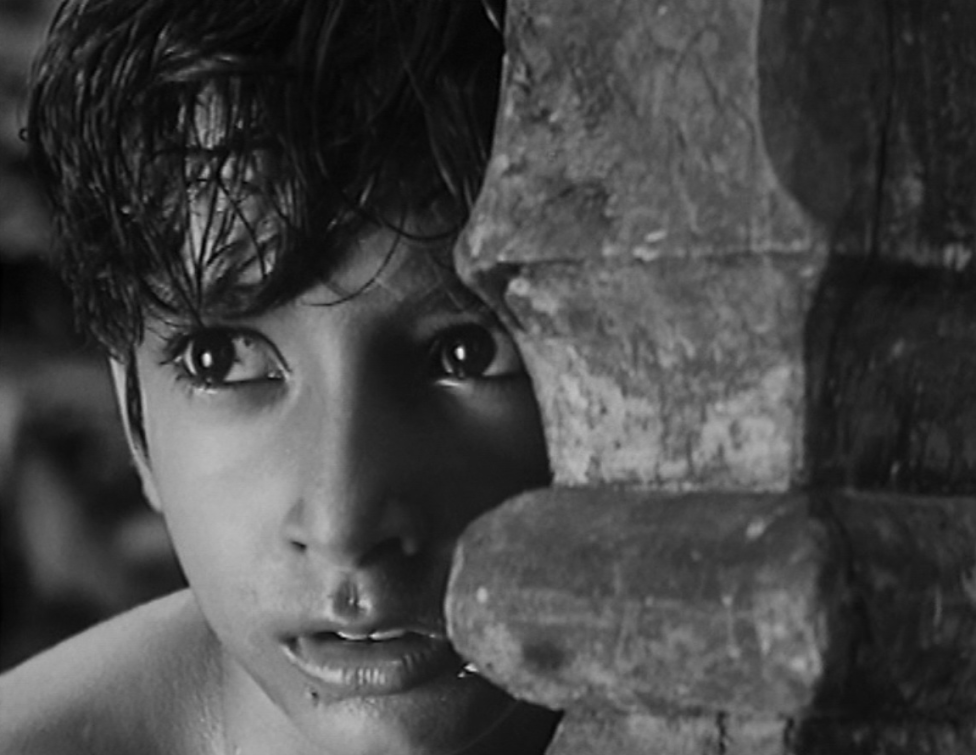

“Pather Panchali” is Satyajit Ray’s debut feature, an adaptation of the classic Bengali novel of the same name, and widely considered to be the film that put India on the world cinema map.
It’s a deeply moving, poetic production, with the rawness and invigoration of a director who felt the need to make the film after seeing “The Bicycle Thieves” in the cinema. He would pawn his records and sell his life insurance policy to finance the film, and it still would not be enough, taking three years to finish the film.
Ray was influenced by the Italian Neorealists, and the touch of the European movement is evident in “Pather Panchali” which used local Bengali speaking actors to depict the life of a struggling rural family, beset by bad luck and misfortune. The youngest son, Apu, would be the focus of the ‘Apu Trilogy’ by Ray, one of the most revered series of films in cinematic history.
The father is a writer and a priest, dictated by his family line. Though the family lives in poverty, with the mother struggling to feed two children and an elderly aunt, the father has an indifferent sense of curiosity of the world, stating that God’s will will be done.
It’s painful to watch the mother can only manage to feed her children rice, and she’s ladled with insults and scorn when her daughter steals fruit from a nearby orchard. The father is gone for days at a time, working without pay, smoking tobacco and writing leisurely.
Even though it was his first feature, Ray and his cinematographer, Subrata Mitra, captured the outdoor scenes of the rural village with such definition and depth that city dwellers will feel a twinge of regret we have all the luxuries you could imagine, but the simple act of running through a field of flowers, or dancing in the rain seems like a distant, receding pleasure.
Mitra was the first cinematographer to use the idea of ‘bounce lighting’, illuminating a scene by reflecting it off a white sheet, the diffuse light creating an incredible reality, as if the scene was lit by sunlight. The technique is common now, but compared to films of the time, “Pather Panchali” lends a heightened sense of reality to the tragic story.
I say:
One of the finest movies ever made, in my opinion. Though it was criticized for its slow pace and depiction of poverty (by Francois Truffaut!), it is still revered as a film that captures the basic essence of humanity: life, death, the struggle to live and to rise up off the ground.
See it for:
A young Ravi Shankar performed the soundtrack to the film, and it is glorious.
To watch more movies like Pather Panchali 1955 visit hurawatch
Also watch: